
The heron family includes the long-legged wading grey heron (Ardea cinerea).Although most of its range is inhabited, some inhabitants from the northern regions move southward during the fall. It is a wetland bird that is found around lakes, rivers, ponds, marshes, and the coast.
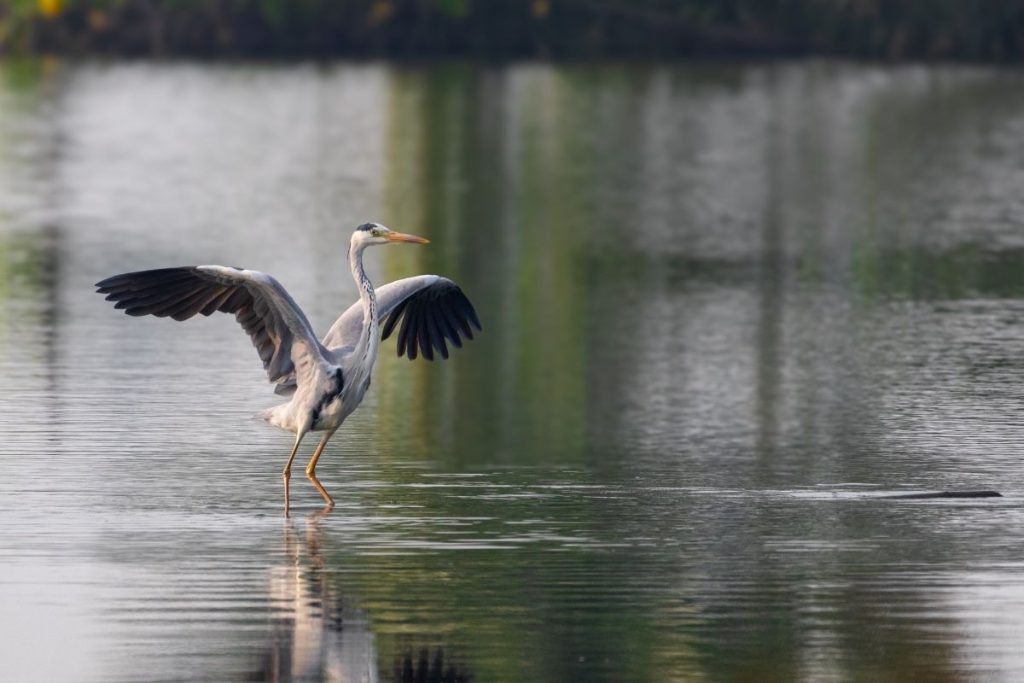
Wings Spread With wings extended, the heron prepares to soar.
Its primary food source is aquatic life, which it captures by pursuing its victim through the shallows or by remaining motionless next to or in the water. The underparts are greyish-white with some black on the flanks, while the body and wings are grey above.
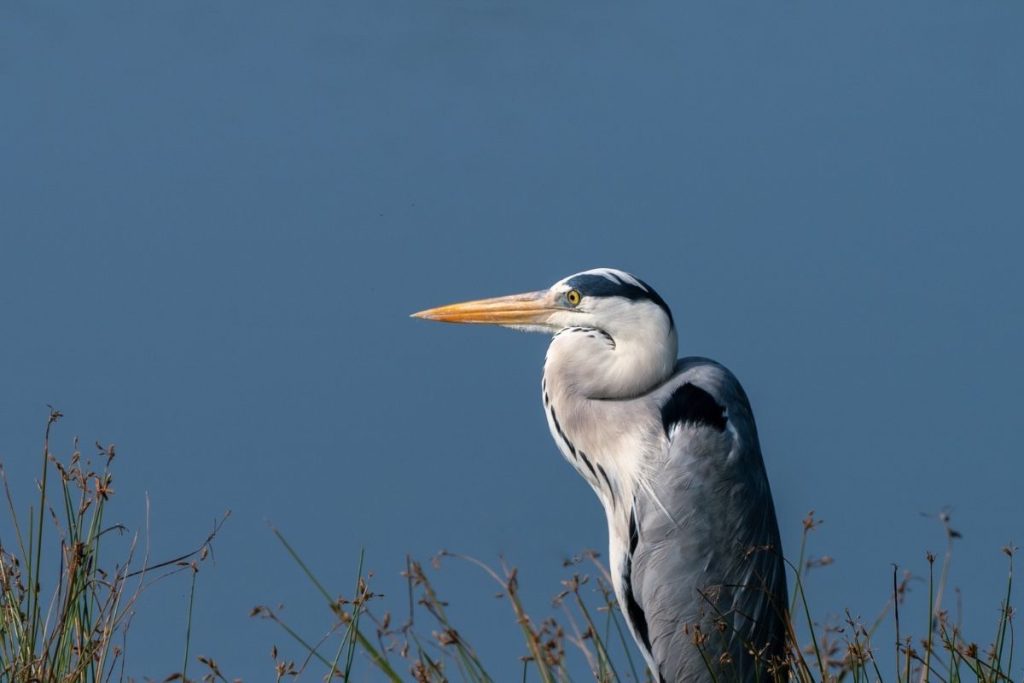
Silent Watch A patient observer of nature.
The legs are brown, and the tall, sharply pointed beak is pinkish-yellow. The birds often construct their nests high in trees and breed colonially in heronries during the spring. Three to five bluish-green eggs are typically deposited in a clutch. Both birds feed the chicks, which fledge around 7-8 weeks of age, after incubating the eggs for about 25 days. Juveniles can expect to live for roughly five years if they survive their first winter, but many do not.
Copyrights : All the photos and texts in this post are the copyright of John Thomas and Creative Hut Institute of Photography and Film. Their reproduction, full or part, is forbidden without the explicit approval of the right owners.
